

 Showroom
 Your Home
 Install & Service
 Products
 Why Buy A Generator
 About Us
 Generator Maintenance
 Find A Location
The Paradox of Choice in Home Energy
Ten years ago, if you wanted backup power in the Permian Basin, you had two choices: a noisy portable unit from the hardware store or a standby generator. Today, the landscape is different. You see ads for “Whole Home Batteries,” solar integration, and smart panels. It raises a valid question for West Texans: In 2026, what is the smartest way to keep the lights on?
At Generator Supercenter of Midland, we believe in transparency. We aren’t anti-battery (in fact, we love energy independence), but we are pro-math. When you look at the raw numbers of staying powered during a deep freeze or a grid strain event triggered by extreme heat, the comparison becomes clear.
Let’s look at the three contenders fighting for your home’s security.
Contender 1: The Public Grid
The Pro: No upfront equipment cost.
The Con: You are renting your security from a system that is increasingly fragile.
The Reality: In Midland, we are all too familiar with the ERCOT alerts pinging on our phones. You are paying for a service via Oncor that is becoming less reliable due to massive grid strain and weather volatility. The “do nothing” strategy is becoming the most expensive option when you factor in frozen pipes, food spoilage, and displacement costs during a blackout.
Contender 2: Whole Home Battery Backup
The Pro: Silent, instant, and pairs well with solar.
The Con: Cost per kilowatt-hour of storage.
The Reality: Batteries are sprinters. They are fantastic for bridging a 2-4 hour gap. But to power a standard West Texas home—running the heater during an ice storm or the AC during a dust storm—for 24 hours or more, you would need multiple battery stacks.
The Math: To get the same energy duration as a 24kW generator, you might spend 3x to 4x the price on battery storage. Once the battery is drained, you are dark until the sun comes out or the grid returns.
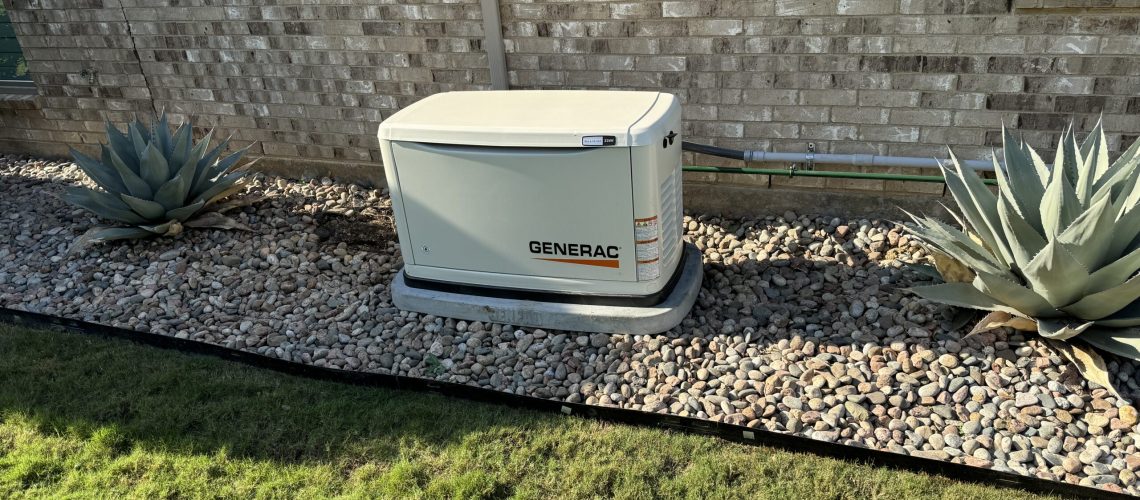
Contender 3: The Standby Generator (The Marathon Runner)
The Pro: Indefinite run time (as long as you have fuel).
The Con: Requires maintenance (oil/filters).
The Reality: A standby generator is an on-demand power plant. Whether the outage lasts 4 hours or 4 days, the generator keeps running.
The Math: For the upfront cost, nothing beats the “Price Per Hour of Protection” that natural gas or propane provides. It is the only solution that guarantees you can ride out a week-long disaster without changing your lifestyle.
The Verdict for Permian Basin Homeowners
If your goal is to bridge a 30-minute flicker, a battery is great. But if your goal is to protect your home from the kind of deep freezes and intense heat we see here in Midland, the Standby Generator is still the gold standard for ROI.
Don’t guess at the numbers. We’ve updated our comparison tools for 2026. Reach out to our team, and let’s run a load calculation on your home to see which solution makes the most sense for your wallet and your peace of mind. You don’t have to face the grid strain alone. Stop by our showroom at 11220 TX-HWY 191 to see the units in person, or give us a ring at 432-777-6937. Let’s keep your lights on.